Oct 30, 2006

Bathroom blogfest week - Restrooms v/s toilets...not just a matter of semantics

My most memorable experiences in the loo date back to my days in college when I spent long hours outside of home or college with friends.Our rambling almost always came to an abrupt end with one of us wanting to visit the loo. At that time no matter where we were, we would head straight to the gateway of india...near which is the luxurious Taj Mahal hotel. While entering we chattered loudly about visiting their pastry shop or visiting some imaginary uncle / aunt who was their guest - out of fear - so that the durbaan (concierge) did not take note of us as just a bunch of giggly girls who ambled into the foyer for no reason.


Once inside the restroom however, the fear gave way to fantasy ...for it was difficult not to lose oneself in that brightly lit room, treating oneself to the cold fresh face towels re-stocked regularly beside elegant faucets. There were dispensers that doled out generous portions of rich creamy fragrant liquid soap. One could admire oneself in the many full length mirrors placed at angles that would allow one to make girly comparisons ranging from whose hair looked the best when tossed behind to whose backside looked the worst ! I do vaguely remember that those rooms had fresh flowers that completed the circle of luxury for me.

Honestly speaking, for those few minutes (read 20) i spent there - I felt like royalty. Luxurious bathrooms or even tastefully designed bathrooms, atleast in India, have been regarded a luxury a privileged few have access to. I don't know the reason - whether it is cultural or habitual or just the state of development in the country - but bathrooms & toilets have for long been neglected terrains. Public facilities are best left untouched (in more ways than one) here for the unsavoury memories they conjure up but even in people's homes and in some cases even rich homes, the toilets i have seen have been a let-down. It could be because of the strong notions of 'purity' that people held on to - not just in the physical sense but also in a cultural sense (cleaning of toilets were considered menial tasks confined to people from the lowest castes). It was also for this reason that historically toilets and bathrooms found their place away from the main house - in a courtyard.
Coming back to the loo at the Taj Mahal hotel, apart from the grandeur that obviously comes with 5 star standards, what was memorable for me was - that it was a place where i did not pinch my nose and rush out. It was a 'room' a place where i did not mind spending time. In fact it was a place where i felt good spending time. It's not without reason that those facilities were and still are referred to as - 'Restrooms'. More than a matter of semantics, words like restroom / powder room / ladies rooms connote an experience.
Learnings

It's not always possible to rush to a Taj and let's face reality that there are only a handful 5 star facilities but it's possible to recreate the same feeling

#Strip the bathroom of that clinically clean / industrial look.
# Introduce Pretty lamp shades instead of jarring white tube lights


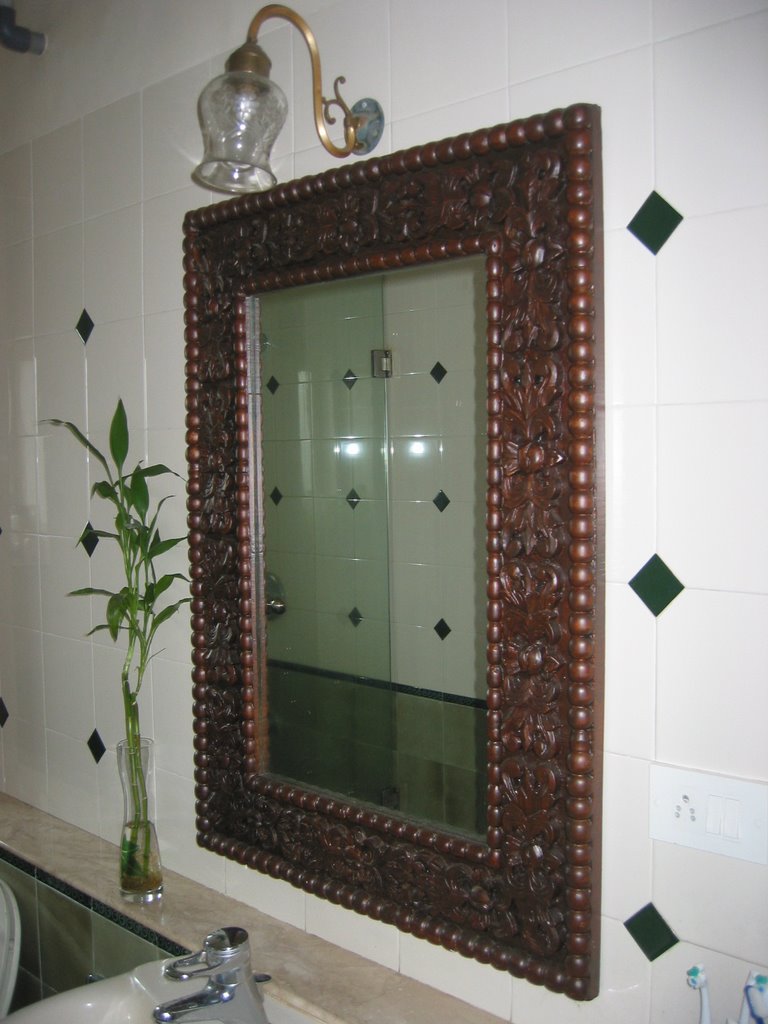
# Place Mirrors set in beautiful frames
# Keep Fresh flowers...and if that is an avoidable chore...potted plants are good too
# Embellish with Pot pourri / paintings / beads and baubles - anything to give it a little personal touch


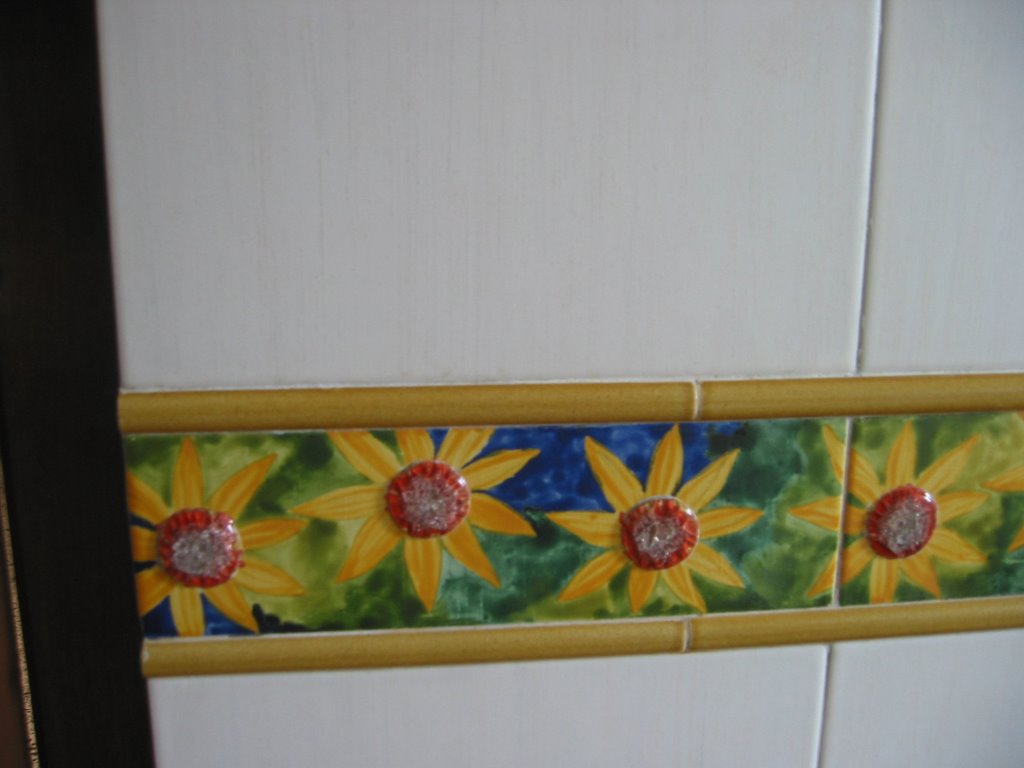
What I liked about this tile border, apart from the cheery sunflower design, is the detailing at the centre of the flowers...those stand out from the rest of the border giving it a 3- D feel.


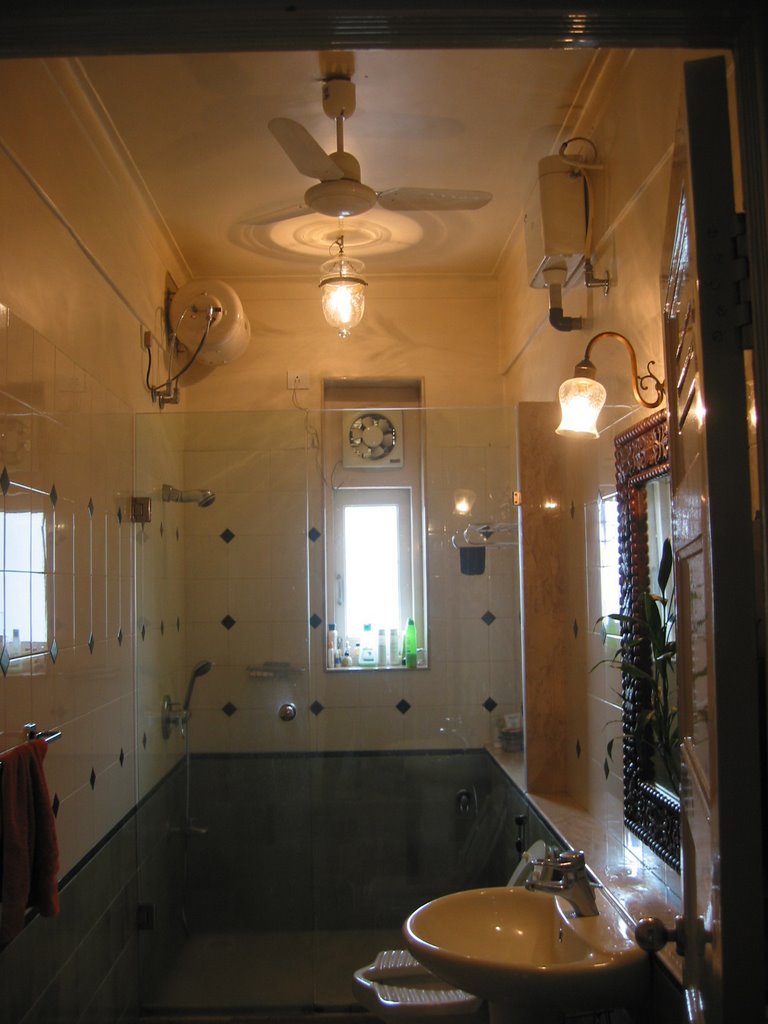
This bathroom has soft yellow lights, ornate lampshades and even a little ceiling fan - truly adding to the comfort and making it look very personal

customer experience, bathroom blogfest, ladiesrooms

Oct 22, 2006

Air carriers, Down-grade benefits, & customer delight…

Last week Jet Airways downgraded my frequent flier membership tier from Platinum to Gold. The large pack that was handed over to me by the courier delivery boy (containing my Frequent Flier Goodies) took me back reminiscing about the good old days when traveling 3 days a week had become a norm and I could reel out airline schedules if woken up in my sleep … but what was I doing with this pack if my tier has fallen a step?
I expected it to contain a handbook with the usual information and was about to chuck it in the bin when I flipped through the papers and was delighted to see ‘3 complimentary business class upgrade vouchers’. These vouchers are usually given to frequent fliers as part of their tier upgrades.

So was this a mistake or was it sent intentionally? Well honestly I do not know. Though I knew that…

As a customer I was delighted
As a customer I was still ‘Valued’ (even though I did not fly with this carrier as often as I used to) – I had not been written off

At a time when there is a glut of cheap, low fare, no frill carriers in the market – here is one that will stand out in my mind for offering ‘a positive experience’ around flying. The airline industry not only in India but also across the world is seen as offering consumers rock bottom prices in a bid to woo them. Of course the rock bottom prices come with little or no service offering. While this tactic works well with the self-financed traveler – it leaves out the chunk of business traveler who is not price sensitive and values comfort or even luxury over economy. Price cuts are tactical, easily replicated by competition and progressively erode the bottom line and brand value. Wooing consumers instead by creating small subtle differentiators around their travel experience and making them feel special goes a much longer way.

Another air carrier that has successfully created such subtle yet important differentiators in their service offering is Kingfisher Airline.

With KF their consumers are referred to not as passengers but as guests. This is not just a matter of semantics. It reflects an attitude - evident in the way the KF staff treats its customers. Step out of your cab at the terminal and you’ll find a KF staff member appear to help you with your luggage into a trolley and right through to the point when you have checked those bags in. What I value the most about KF is their consistency - that it is the only organization I have encountered so far that does not penalize the consumer for lack of clarity on the how their policies are interpreted. On this one occasion I was trying to get my ticket postponed. The response I got from the call centre was that I could get it done at the airport, while at the airport I was told that since my ticket was a free ticket it could not be postponed at all. When I told them the call centre staff had mentioned otherwise – the lady at the airport enquired with her supervisor and came back with the response – ‘we do not normally do it but since the call centre staff has promised you this – we’ll keep up their word’. And if this is not all if you have any service issues feedback mails sent by you are read by the chairman himself.

And now for some mentions – ‘not so positive’…

While thinking about what annoys me the most about air travel I arrive at two areas that are top on my list

a) Long winding instructions (and especially if you are in a multilingual country) repeated in 2 – 3 different languages. Why can’t they keep their language simple, informal and instructions short. For instance – instead of saying ‘please continue to remain seated till the aircraft comes to a complete halt’…why not say – please keep seated till the aircraft halts… I am sure the sentence can be edited even more
b) And secondly - why don’t they have gender specific restrooms on board? If its not enough that there is such a paucity of space in the restrooms – the thought about & experience of using the unisex restrooms makes me want to never get on an aircraft again. I am sure the information on the number of male / female passengers is captured while people are boarding and it’s possible to allocate 1 or more of the restrooms exclusively for women depending on the traffic.

Taking about restrooms – we have a blog event coming up towards the end of the month called the Bathroom Blogfest, where women bloggers would be posting about their experiences around the ladiesroom and how these can be designed to make the experience better. You can find more details about it here and here.

customer experience, Jet Airways, Kingfisher Airlines, ladiesrooms

Sep 22, 2006

Right here! Right Now! - The use of ‘present tense’ in narratives

Narratives are powerful as a data collection tool in qual research. Story telling is interesting as much as it is intuitive. We all are used to hearing and narrating stories.

The process of story telling in research brings forth - the tiny juicy details around a consumer’s experience that can make any researcher’s day! These nuances are what make one consumer’s shopping trip or washing moment different from another. In a researcher’s quest for attaining a near perfect understanding of the consumer’s experience - it goes without saying then that more the details recalled while narrating an incident – the more vivid is the description and proportionately higher is the understanding and appreciation of such an event.

Story telling most often happens in retrospect and narration most often involves use of the past tense. But what were to happen if we were to take the less beaten track and start narrating stories in the present tense.

While writing about my experiences some days back I found myself oscillating between tenses. On the one hand – rules of grammar learnt in high school forced me to use the past tense, on the other hand I found writing in the present tense helped an easier recall of the tiny details that served to bring the story to life.

When we narrate in the present we relive the moment while narrating in the past is analogous to recall. When we recall something – we are distant (to a certain extent) from the emotions that are associated with an event – it is like watching a sepia toned image in an old photo album. Reliving is experiencing the event with its emotional paraphernalia.

(Taking a bit of a detour – the present tense is actively used in psychotherapy in dealing with repressed emotions / memories – to aid subconscious feelings and emotions in coming to the fore and to experience the event in full blast as it were – while when the therapist wants his client to disengage emotionally - the client is often asked to metaphorically see the event in a picture album / tv screen)

This does not mean that just encouraging consumers to use the present tense in narrations would do the trick. Since we are used to narrating in the past tense – it may warrant some prodding / setting an example to / the consumer. Encouraging the consumer to use as many of his sense organs (olfactory / visual / auditory / kinesthetic) as possible would definitely aid the process.

It is not without reason that the use of present tense to narrate an incident of the past is called the ‘vivid present’. Writers have experimented with the use of the ‘vivid present / historical present’ in literature. Why not experiment with it in qual research I’d say?

Sep 1, 2006

Describing pain…On how can research be designed to help consumer’s articulate emotions?

A tear in my knee cartilage has meant that I frequented a physical therapist – where I was often asked to give a report on the nature and extent of pain I felt.

I started to describe it but something just did not feel right…

I did not have the right words – resulting in a 2 minute long winding sentence - that gave the therapist only a vague idea of what I felt inside

The therapist tried to understand more by asking me questions….which did not do either of us any good

Was it a stretch or a pain? I could not discern

Was it bearable / unbearable? Even if it is bearable – what does that tell you – my threshold for bearing pain could be far higher than that of another individual

How would you rate it from 0 to 10 where zero is no pain and 10 is the maximum?
How do I know what maximum pain feels like? It certainly is not zero, but unless I don’t know the maximum where do I pitch it on the scale?

The whole experience reinforced two things I have known and learnt but haven’t paid enough attention to – perhaps the first hand experience was necessary to appreciate the nuances

a) Emotions are subconscious. Emotions surpass language. Language offers a surrogate way of understanding emotions but words cannot totally and accurately describe what one feels. Try articulating - what you feel when you feel happy / what it means to be in love...and you'll find yourself grappling for words

b) Emotions are felt and sensed as an amalgamation of visuals, images, sensations – its difficult to isolate these sensory perceptions and describe them individually. Also some of these sensations are so subtle and so much beyond our conscious understanding and expression that even if you know how you feel – translating it to words for even a reasonably articulate person is quite an uphill task

All this makes me now a little more sympathetic and sensitive towards research respondents who say ‘I just cannot describe how I feel on seeing this ad’ or worse still remain silent or say I don’t feel anything at all. Those are not just respondents behaving lazy or indifferent. Those are very real flaws in the way we question consumers and design research.

Visualizing emotions may help – asking consumers to close their eyes and
Describe what they see, hear, smell
Where in their body they see it
The colors / images they see or the sounds they hear etc

An exercise in visualizing emotions could not only make it easier for consumers to articulate those – (rather than trying to answer a blanket question like what do you feel?) but also it could offer cues that could be used in designing communication.

(Where is the emotion felt in the body / how it is seen inside etc – for instance adverts for pain relieving tablets often show pain in originating from the affected part in concentric circles and warm colors)

Doing this exercise while the consumer is mentally relaxed with his eyes shut – would mean a greater probability that his focus / attention is inward driven

If getting a rating on the emotion is crucial to the research design then design a scale that is more consumers friendly. This is one good example I found (read last para) where the scale uses everyday experiences from the consumer’s life as benchmarks – rather than abstract descriptors.

This brings me to a related issue – how appropriate is it to compare / aggregate responses pertaining to emotions – since emotions are a very subjective an individual experience, perhaps also influenced by the cultural set up one is part of.

For example – one child understands of pain or happiness - could depend on his experiences / what he is made to understand about pain by his peers or influencers, the physical, emotional, social environment he grew up in.

I guess this would deserve some more reading and another post.