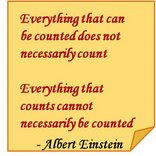
No, those are not the official taglines to the Zune or the iPod campaign though for me, those lines summed up where the two brands stood and what they created for consumers - at a given point in time. The contrast could not be better timed.
The Zune and iPod shuffle were launched approximately 10 days from each other. The 'generation gap' between the products was apparent yet comparing the brands was a foregone conclusion.
While the iPod comes out...
The iPod has long enjoyed an iconic status. The white ear phones have over time became ubiquitous. A tell-tale sign of the popularity of the device and the brand. I read about kids (less fortunate than the ones who could afford an iPod) who'd paint their black ear phones white, to feel like a part of the cult of the cool. Then there was someone who just bought a pair of white earphones from eBay without ever owning an iPod. Its not difficult to guess why. It is no longer a device sported by music aficionados. It has acquired the status of a fashion accessory that people feel they must have. The conspicuous presence only fuels its popularity and sales further.
The iPod shuffle takes the whole idea of the iPod being a fashion accessory to the next level. While earlier generation iPods stayed ensconced within pockets and let the ear phones do the talking, the new generation shuffle is smugly perched outside.
The Zune goes in...
Contrast this with the close to 5 ounce Zune know for its bulk amongst other things. Its no surprise that the Zune would have stay content indoors (inside bags and pockets) for a while.
Visibility signals popularity and to that extent Zune takes a beating on account of its bulk. However the story does not end there. It only just begins. Since related to the issue of visibility is a feature that is touted as the product's raisons d'être - the wifi capability which makes the 'social' happen so to say. Now the problem is that though Zune did welcome people to the social, it expected consumers to create a social by themselves. Early adopters have been looking high and low for fellow Zuners to experience music transfer through wifi , though only very few have been lucky. Why? A combination of factors - visibility being one of them.
Its not difficult to imagine, that if people are on the go, it is highly likely that that even if they were carrying their Zunes with them the device in its current avataar is not conducive to being sported outside. I suppose the ear phones are not distinguishable either. With the lack of visibility the probability of tracing a zune user to wifi with becomes slim. Overlay this situation with the fact that keeping the wifi turned on all the time is a tremendous drain on battery - and what have you. Far fewer Zunes that are wifi enabled and a bunch of early adopters not getting enough chances to test the single most differentiating feature of the product. The subliminal message that consumers get as a result is that the product has not really take off in the market since they can't find people with it.
Notwithstanding the contrasts, what is common to both these brands is how - in both cases visibility has become a surrogate measure for popularity which in turn will influence sales - only consolidating the positions further.
iPod Shuffle,iPod v/s Zune,Zune,
Jan 21, 2007
iPod v/s Zune - wear the music v/s where's the music

Jan 12, 2007
Using Hypnosis in Qualitative Research
Hypnosis has come a long way from being perceived as a manipulative tool. It finds mention in the world of psychiatry, medicine and forensic sciences. However, snooping on the consumer’s subconscious - just to sell tea or soap is thought to be unusual and unethical by most of us.
Hypnosis – a window to the consumer’s subconscious
Marketers have long felt the need to go beyond the consumer’s conscious and rational thoughts. The application of projective techniques in research has partially fulfilled that need. Albeit indirectly, these techniques allow us access to the consumer’s subconscious. Instead of articulating their experiences directly, consumers project their feelings on to other people / objects thereby circumvent some of their rational defenses. This indirect approach still leaves a gap in understanding which a segment of marketers, is attempting to bridge by directly accessing the consumer’s subconscious - through hypnosis.
Hypnosis involves creating ‘an artificially induced state in which the layer of the conscious controlling apparatus in the individual is cleared away, which opens up the subconscious world of the person’. Imagine a see-saw - with the two planks representing the two streams of consciousness. When the conscious stream is lying low, the subconscious stream comes to the fore.
Contrary to what people believe, hypnosis is a natural and safe experience that we often encounter without awareness. For instance, a person walking on the road, listening to his iPod may not be aware of the time / distance he has covered, yet he would be conscious of road safety, traffic rules and his destination. The difference between that and the hypnotic trance is – that the former is a natural trance, whereas the latter is induced deliberately - by deep relaxation and focusing that dilutes the attention of the conscious mind.
How does hypnosis add value to consumer research?
A woman in her early 40s recalls her first memory around a brand of tea. Tea is the first thing she learnt to make and on this occasion is serving it to her guests. The sense of pride she felt 30 years ago is visible on her face as she relives the experience. Praise for her effort translates into a trust and connection she makes with this brand. Such narrations bring a whole new dimension to responses otherwise expressed in research as ‘I cannot change the brand of tea that I have used for the past 20 years since I’m used to it’. Probe further and the conversation takes a familiar turn where taste, strength and flavour dominate the discussion! Through hypnosis, it is possible for consumers to be age-regressed in time, to recall their first encounters with brands and the associated emotions which help marketers get cues on the drivers for brand loyalty.
Since the conscious mind is dormant, while in hypnosis consumers are less inhibited and talk about personal experiences such as shaving, bathing, and oral care without embarrassment or hesitation. This does not mean they will unknowingly reveal details they don’t intend to. Even while in hypnosis one cannot be forced to say or do anything that goes against their morals or sensibilities.
In a conscious state an individual recalls an incident, whereas in hypnosis he relives the moment. Consumers have reported experiencing the same emotions they had once felt. I felt I was actually there is what one would hear after such an interview. This feeling of ‘being there’ also means that the amount of detail recalled or sensory perceptions felt during such interviews is unmatched. This is particularly useful while researching activities such as grocery shopping, brushing teeth, washing clothes which are low on involvement and monotonous or categories such as food or shampoos where sensorial cues matter and are otherwise difficult to verbalize.
Besides bringing new dimensions to the content gathered, hypnosis aids the research process. Since the focus is driven inwards, a person under hypnosis is not distracted by external stimuli and not consciously aware of the time elapsed. Thus the quality of responses does not deteriorate with lengthy conversations. Moreover, it helps consumers understand their own thought process better and therefore can be an enriching experience for the consumer as well.
A few caveats
Hypnosis is a powerful tool in the hands of a researcher and the need for training cannot be overemphasized. Abreaction i.e. the involuntary release of a repressed negative emotion is a possibility that the hypnotist ought to handle discreetly. Also a person under hypnosis is highly suggestible and this implies that the hypnotist use the tool ethically - only to understand the consumer’s thoughts and not plant suggestions in his mind for commercial gain.
Hypnosis,Hypnosis and Qualitative Research,Consumer and Subconscious,
Jan 5, 2007
On using Mind-Maps in Qualitative Research

Linear discussion guides made to exacting specifications
I dislike voluminous discussion guides. What I dislike even more is that a researcher is expected to revise discussions guides repeatedly to set the tone just as the client expects it to be. In my early days, I came across some researchers actually memorising the guides, and i don't blame them. The structure of a guide (linear, flowing from page-to-page) does not lend itself to easy adaptation especially for a rookie with a client sitting in a back room, looking for a skipped question rather than intently listening to the discussion .
The futility of the effort is magnified since these guides don't serve the purpose in the first place. We are not programmed to think in a linear fashion. Our mental associations do not always follow patterns such as
1. xxxxxx
1.a yyyyyyyy
1.b zzzzzzzzz
Which is why you hear consumers jumping from one topic to another in their responses, and find a researcher frantically turning pages trying to mentally tick off points covered. Worse still trying to force the discussion back to a linear format. Instead of delving into mental associations, we focus on the discussion structure. Talk about missing the forest for the trees !
The Byzantine web of thoughts
The picture represents our neural structure. Our thoughts are organized and stored as a web of associations in the brain. One thought could trigger multiple thoughts along one or more dimensions. Besides, the development of these thoughts does not follow any pre-determined order or sequence. Sometimes even the very mention of a category / brand, could evoke a spring of thoughts in the consumer's mind. There is a divergence between the actual and the assumed process of cognition leading to a loss of information.
Mind-maps mirror our thought process
Mind maps like the one illustrated at the top can be constructed using any mind-mapping software. These are intuitive since these are a representation of our natural flow of thoughts.
- The mind map in lieu of a conventional discussion guide allows the researcher to scan the fluid pathways of information as the conversation evolves rather than jump back and forth between pages to keep pace.
- Its application and use in research does not stop there. In my limited exposure to mind-mapping i have found that it aids the mental process of capturing the 'information' areas before conducting research.
- While listening to consumer conversations, one can visualise some of the mental associations consumers make and their flights of thought as these happen.
- Visualising those flights of thought has also been useful, while analysing & drawing inferences from the data, since it eases the process of finding patterns to an extent.
Reference: You can find the link to download the mind-mapping software on this page To my mind it is easy to get used to !
Mind Map,Mind Map and Qualitative Research,Discussion Guide,Discussion Guide and Mind Map,
Dec 28, 2006
A game of Tag and branding
 What was that again...Zeilg....never mind !
In case you are wondering why I am saying all this - I am taking off from C.B's post here. She posted an interesting thought about how the 'game of tags' in the virtual world could be put to use in the real world to enhance customer experience. She writes...
The whole concept of 'blog tag' reminds me that often the hardest part of developing a relationship with customers is that initial point of connection. So, imagine enabling that connection through a non-virtual version of 'blog tag'... Think of hotels where the concierge and others wear nametags showing both city of origin and name. Don't your eyes gravitate to that information? And, don't you start a conversation with that person relating to that info?
4H5-ZPTO
Whenever I am asked which mobile handset i use, I say 'Nokia'. Even while i say it, i can anticipate the next question. Which model? And i have to reluctantly say 'I don't know'. The conversation does not end there, but it suffices to say that no matter how hard i try, I cannot for the life of me remember alpha numeric codes. It is for the same reason that communication for hardware / electronics - that reel out such numbers - does not resonate with me.
Vin Cuit
Ever been to a restaurant, where instead of telling the person taking your order what you'd like, you've had to point a finger to the menu since you were too embarrassed to pronounce. Worse still ever had an experience where instead of deciding what you'd like to eat, you stare at the strange words on the menu with the alphabets rolling in front of your eyes. Names that are originally linked to a cuisine do have a ring of authenticity, though the customer could have the an unpleasant experience with the words rolling over his tongue.
Of Scandinavian lakes & Swedish Islands
Ever bought garden furniture or bathroom accessories that were named after lakes and islands. You probably have except that it hasn't clicked that funny looking jumble of words on your IKEA products actually meant something! People who buy IKEA do so for the design elements and affordability and a product name would not deter them from their purchase decision - but it does leave consumers wondering, gives them no context to the product name and in some cases even causes inconvenience.
Where do the 'dots' go
My last thought on the subject is on del.icio.us and i still don't know whether i have got the dots in the right place and frankly, it does not matter any more since if you did type just 'delicious' - it would take you to their site, but once upon a time it did not and one had to take the trouble to remember. Fortunately for them, they recognized this and made the corrections early on!
but...Marketers do!
(In what and how their brands / products are named)
Ref
Where i first read about the trouble with the delicious name - the delicious tax
A two part article decoding the mystery behind the IKEA product names - Part 1, 2
What to watch out for while considering brand / product names - here and here
brand names,product names,IKEA,del.icio.us,